Handling That Responds to Steering Input
Suspension Replacement in Edmond for bouncing over bumps, nose-diving when braking, and uneven tire wear
Excessive bouncing after hitting bumps, the front end diving sharply during braking, or tire wear that's heavier on one edge than the other all indicate worn suspension components that no longer control wheel movement properly. Frontier Towing & Automotive inspects shocks, struts, control arm bushings, and stabilizer links to identify which parts have failed and how that wear pattern affects your vehicle's handling in Edmond. Technicians measure suspension travel, check for fluid leaks from shock bodies, and test bushing integrity to show you what's causing the symptoms you feel while driving.
Suspension inspections involve lifting the vehicle to measure play in ball joints and bushings, checking shock absorbers for fluid leaks that indicate seal failure, and examining strut mounts for cracking or separation that allows excessive movement. Worn suspension parts contribute to uneven tire wear because wheels don't stay aligned properly through the full range of suspension travel, and poor vehicle control results when damping forces no longer absorb road impacts.
Schedule a suspension evaluation to identify which components need replacement and how that affects handling.
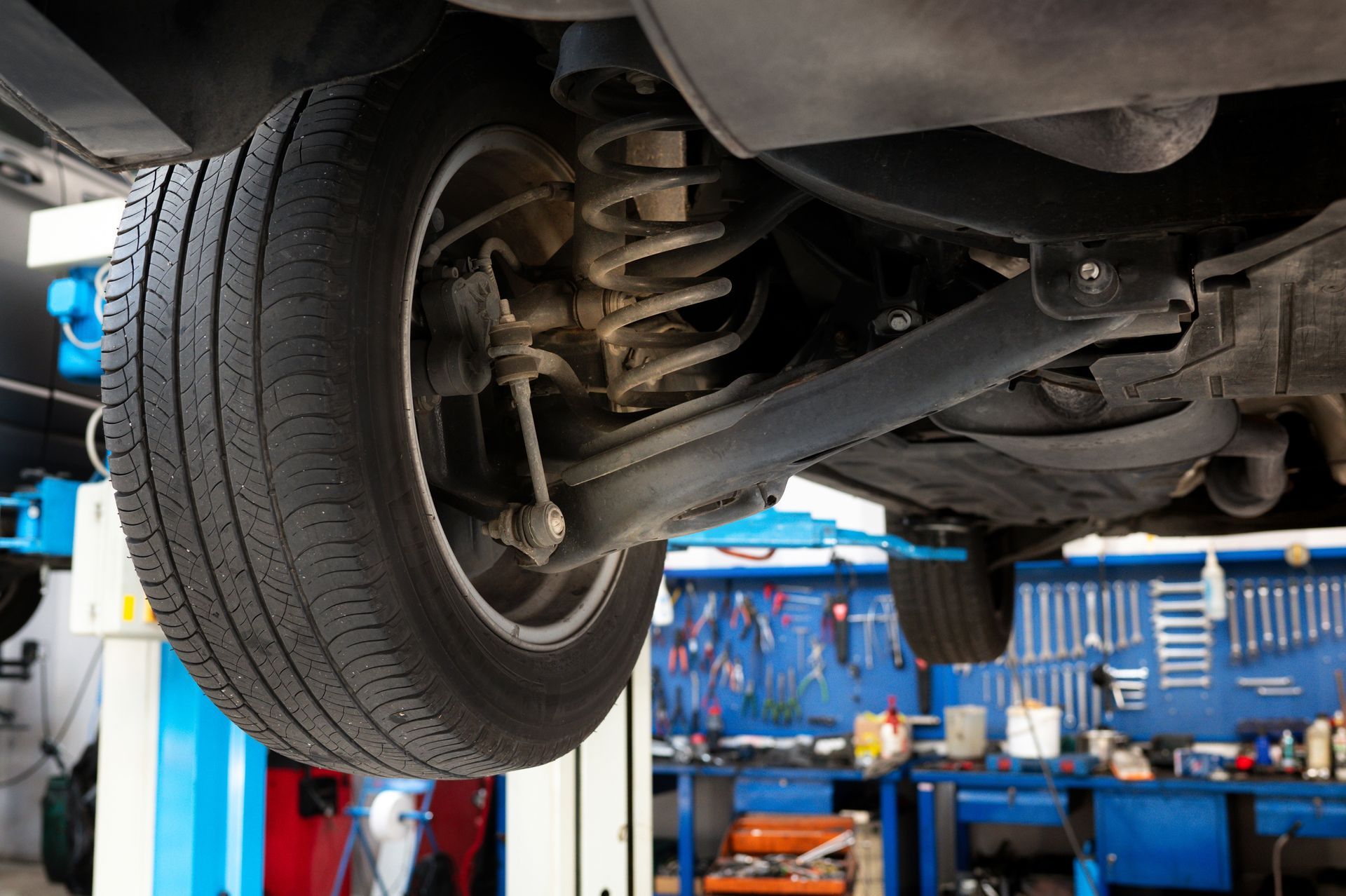
Suspension replacement installs new shocks or struts that restore damping control over wheel movement, replaces worn bushings that allow excessive play in control arms, and addresses stabilizer links that no longer prevent body roll during cornering. Quality replacement components are matched to your vehicle's weight and intended use, so daily commuters receive different damping rates than vehicles used for towing or hauling.
After replacement, the bouncing over rough pavement stops because shocks absorb impacts instead of letting them transfer directly into the cabin, nose-dive during braking decreases because struts control weight transfer, and tire wear evens out because wheels maintain proper alignment geometry throughout suspension travel. Steering response improves because the vehicle no longer wanders or requires constant correction on flat roads, and cornering feels more controlled because stabilizer bars limit body roll.
Repairs support safer operation by restoring the suspension's ability to keep tires in full contact with the road surface during braking and cornering. Service recommendations are based on thorough inspections that measure wear against specifications, not on mileage alone, because driving conditions affect component life more than odometer readings.
Questions Before Starting Your Project
Suspension replacement raises questions about which components actually need service, how worn parts affect safety, and whether alignment is always necessary after the work finishes.
What symptoms indicate suspension problems versus tire issues?
Bouncing that continues after hitting bumps points to failed shocks, while vibration at highway speeds usually indicates tire imbalance—but uneven tire wear often results from suspension components that no longer hold alignment settings.
How do technicians determine which suspension parts need replacement?
Visual inspection identifies leaking shocks and cracked bushings, but measuring ball joint play and testing shock damping force with specialized tools reveals wear that isn't visible but still affects handling and tire wear patterns.
When does suspension replacement require wheel alignment afterward?
Any work that disconnects components affecting wheel position—like struts, control arms, or tie rod ends—changes alignment settings, so post-repair alignment ensures tires wear evenly and the vehicle tracks straight.
What causes premature suspension wear in Edmond?
Rough pavement, potholes, and unpaved roads stress components beyond normal wear rates, while Oklahoma's freeze-thaw cycles deteriorate rubber bushings faster than in climates with stable temperatures year-round.
How does worn suspension affect braking distance?
Failed shocks allow weight to transfer excessively during braking, which reduces tire contact pressure on rear wheels and extends stopping distances because front brakes handle a disproportionate share of braking force.
Frontier Towing & Automotive explains which suspension components show measurable wear and how replacing them improves handling versus addressing parts that still function within specifications. Request an inspection to see test results that clarify whether your handling concerns come from suspension wear or alignment settings that can be adjusted without parts replacement.